Stepping outside familiar professional environments is often the fastest way to identify emerging leadership signals.
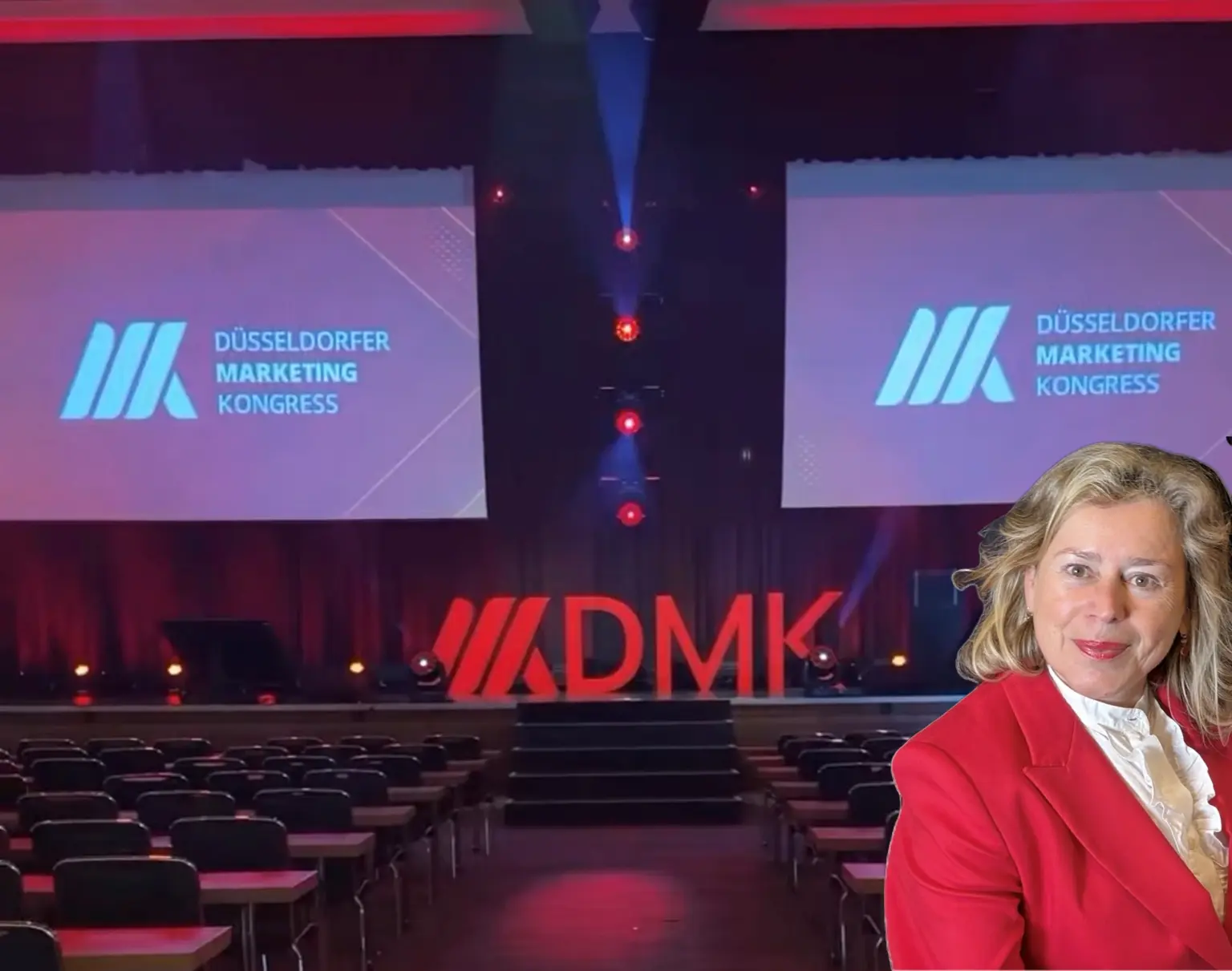
During the Düsseldorfer Marketing Konferenz, an event focused on marketing and leadership insights for German SMEs, several concepts stood out that reach far beyond marketing. They speak directly to how organizations build trust, structure leadership and sustain performance in increasingly complex environments.
Five ideas were particularly noteworthy.
KPU – Konsequente Positive Unterstellung
(Consistently assuming positive intent)
Entrepreneur and investor Judith Williams highlighted a simple but powerful mindset principle: KPU – Konsequente Positive Unterstellung. The concept encourages leaders to begin interactions by assuming positive intent in the actions of others. While seemingly straightforward, this principle can significantly influence organizational culture. Starting from trust rather than suspicion often enables more constructive dialogue, faster decision-making and stronger collaboration.
Trust Is Built Through References, Not Content
In an environment saturated with digital communication, trust remains anchored in third-party validation.
Recommendations, citations and independent publications remain essential mechanisms through which credibility is built and maintained. For organizations seeking long-term trust, reputation architecture — not just content production — becomes a strategic priority.
Publishing in the Age of AI
As AI-driven search increasingly shapes how expertise is discovered, credible publications and structured knowledge assets gain strategic importance. Organizations that invest in credible, citable knowledge will increasingly shape what AI systems surface when expertise is searched for.
AVKK – Leadership Clarity
Leadership expert Felix Anrich summarized role clarity through a concise framework:
AVKK – Auftrag, Verantwortung, Kompetenz, Konsequenz
(Task – Responsibility – Competence – Consequence)
Organizations frequently define tasks and responsibilities but overlook the final dimension: consequences.
mployees must understand not only what they are responsible for, but also how performance outcomes affect the organization. In times where harmony is sometimes mistaken for leadership, clarity remains one of the most important leadership capabilities.
Leadership Energy and HRV
Healthy leadership also includes physiological resilience. Lea Feder Leder highlighted Heart Rate Variability (HRV) as a measurable indicator of stress adaptability and recovery capacity.
Most people ensure their mobile phones are fully charged every morning — yet rarely measure or manage their own energy levels with the same discipline.
As leadership environments become increasingly demanding, energy management becomes a strategic leadership capability.
Key signals
KPU – assume positive intent
Trust – built through credible references
Publishing – matters in the AI era
AVKK – clarity in leadership roles
HRV – measure and manage your own energy